You’ve finally got a bedtime that works, and now you’re packing the car for three nights at Grandma’s. If you’re quietly dreading the 2 a.m. wake-ups in a strange room, you’re not alone. Holiday travel and toddler sleep rarely mix perfectly, but a few nights of disruption don’t have to undo your progress. With some planning before you go, a safe and familiar setup when you arrive, and a simple plan for the first week home, most little ones settle back into their usual rhythm.
Why babies and toddlers wake more when you travel
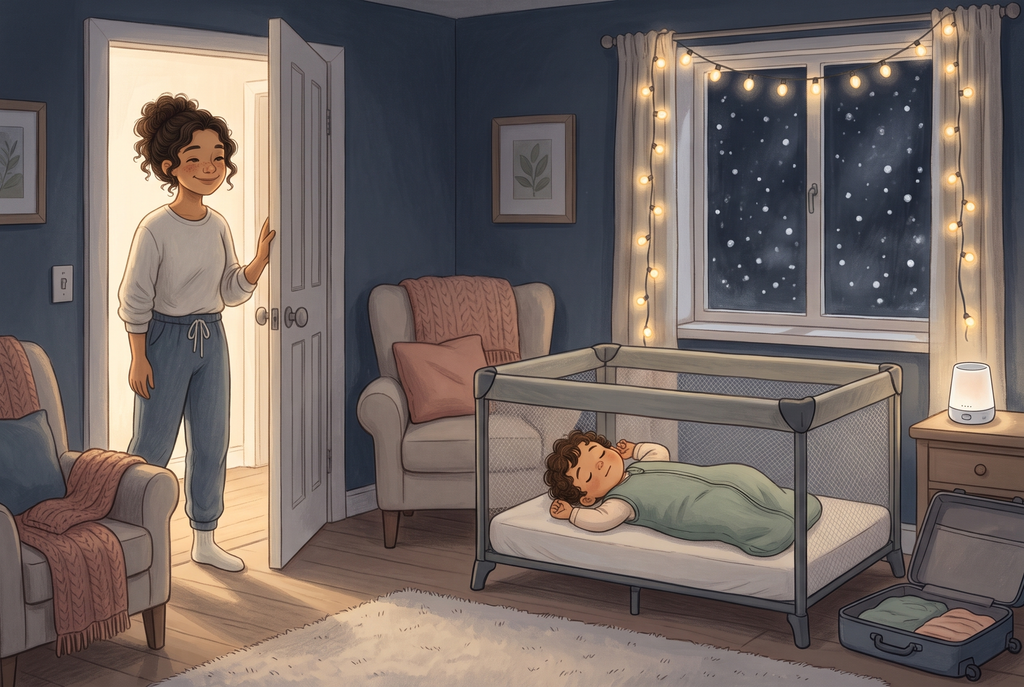
Night waking on a trip usually has ordinary causes, and knowing them makes it easier to stay calm:
- A new room. Unfamiliar sounds, light and smells make it harder to drift back to sleep between sleep cycles. Raising Children Network notes it’s natural for children to feel unsettled when sleeping somewhere new.
- Separation anxiety. From around 9 months, sleep disturbances become more common as separation anxiety develops, and a busy house full of relatives can make a toddler extra clingy at bedtime.
- Skipped or shortened naps. Car naps, excitement and late dinners add up, and an overtired toddler often wakes more, not less.
- Changed sleep associations. If you rock, feed or lie down with your child every time they wake on the trip, they may start expecting it at home too.
None of this means something is wrong. It means your child is reacting normally to a big change in their world.
Before you go: plan and pack for familiar sleep
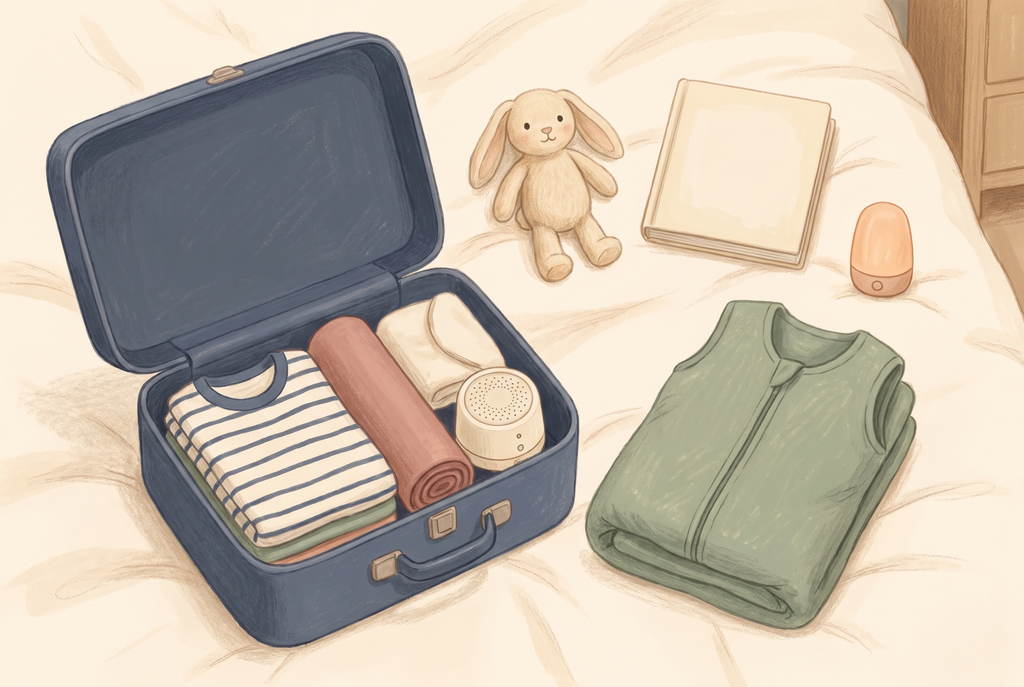
The goal is to bring as much of “home” as you can.
Plan travel around sleep. Starting a car journey at nap time often works well, and Raising Children suggests planning trips around your child’s sleep or rest time. If you’re flying across time zones, spend awake time in daylight at your destination to help body clocks adjust.
Practise with the travel cot. If your child will sleep in a portable cot or play yard, Queensland’s Children’s Health service suggests practising naps in it a week or so before your trip so it feels familiar.
Pack a sleep kit in one bag:
- The sleeping bag or sleep sack they use at home
- Their usual pyjamas and a familiar bedtime book
- A portable white-noise machine, if you use one
- Travel blackout blinds or a few clips to close curtains
- A night-light for feeds and checks
- A favourite comfort toy (for toddlers over 12 months; see below)
Ask ahead. Many hotels and holiday rentals have portable cots available on request, so the American Academy of Pediatrics suggests asking when you book.
Safe sleep and bedtime away from home
Travel is when safe-sleep habits are most likely to slip, so set up the sleep space first.
For babies under 12 months, the AAP recommends a crib, bassinet, portable crib or play yard that meets current safety standards, with a firm, flat mattress and a fitted sheet only. Nothing else should be in the sleep space: no pillows, blankets or soft toys. Use only the mattress that came with a travel cot.
A few holiday-specific reminders:
- Don’t improvise beds. Michigan State University Extension warns against putting babies on couches or inflatable mattresses, or in bed with siblings or other family members.
- Move sleeping babies out of car seats. If your baby falls asleep in the car seat, move them to a firm, flat sleep surface as soon as you can. Car seats are made for travel, not for sleep outside the vehicle.
- Resist bed-sharing. It’s tempting in a strange room, but the AAP advises using a portable crib or play yard instead. Don’t relax safe sleep habits.
For toddlers over 12 months, a familiar comfort toy is generally considered low risk; the AAP notes most experts agree such objects pose little risk to healthy babies after 12 months of age. That bunny can be a powerful “this is bedtime” signal in a new place.
Keep the routine, even if it’s shorter. If you’re in the same time zone, sticking to your child’s usual sleep routine helps. Bath, pyjamas, book and song can happen in a guest room just as well as at home. A busy day of travel? Some active play before bed can help a child feel ready for sleep.
Handling night waking at Grandma’s or the hotel
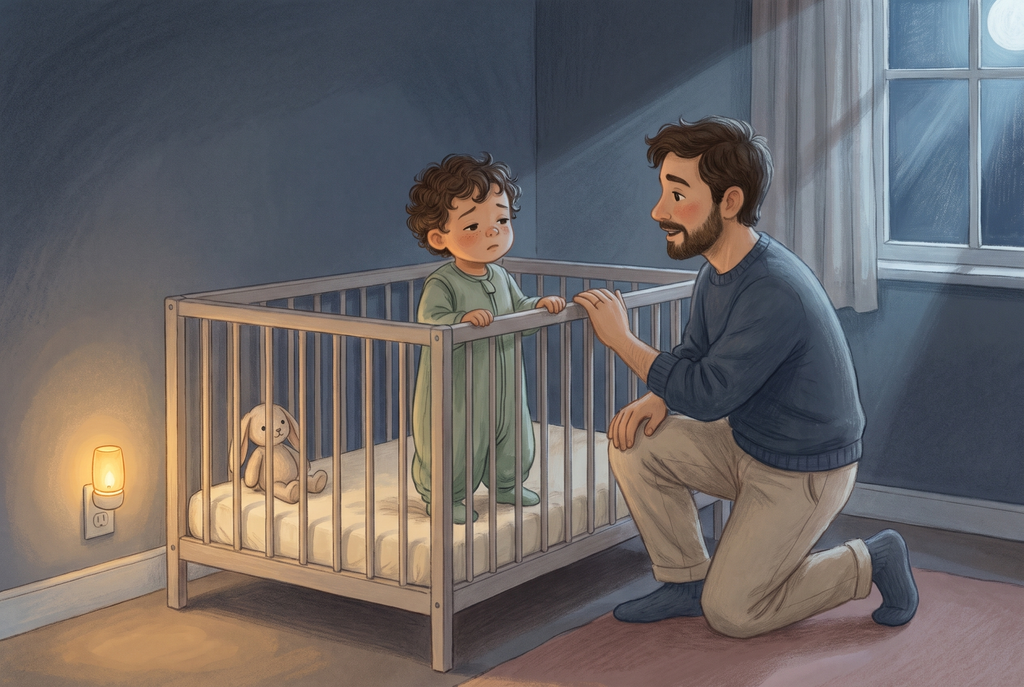
You will probably have at least one rough night. Here’s how to stop it becoming a new habit:
- Pause before rushing in. Many brief wakings settle on their own, especially in a new place. Give it a moment if your child isn’t distressed.
- Respond the way you do at home. If you normally use a quick check and a calm “it’s sleep time”, do the same here. Doing something brand new, like bringing them into your bed, can follow you home.
- Comfort, then step back. A child in an unfamiliar room may genuinely need more reassurance. Sit nearby, keep the lights low and your voice quiet, and gradually do less as they settle.
- Keep it boring. Middle-of-the-night chats with an excited cousin or a peek at the holiday lights make waking more interesting. Calm and dull wins.
- Brief the relatives. Let family know your plan so nobody swoops in with a midnight snack or a cuddle on the sofa.
- Protect the next nap. One late night is fine. Two or three in a row with short naps is when overtiredness snowballs, so prioritise one solid nap the next day.
If your child seems unwell (fever, ear pulling, breathing trouble) treat it as illness, not a sleep problem, and get medical advice.
Getting sleep back on track once you’re home
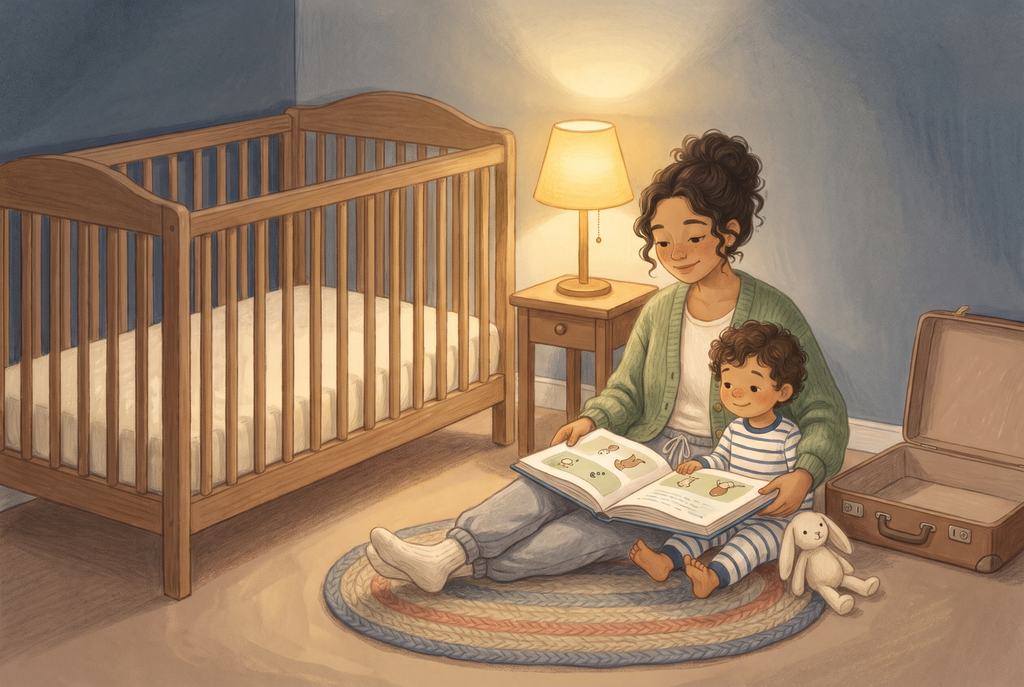
Most families find the first few nights back are the real test. Reset deliberately rather than waiting to see what happens:
- Go back to your normal routine on night one, at your usual bedtime.
- Drop the travel extras gradually. If you started sitting in the room or feeding back to sleep on the trip, ease off over several nights rather than stopping suddenly.
- Be consistent for at least a week. The same response every time helps your child relearn what to expect.
- Expect a short wobble. A night or two of extra waking is common before things settle.
If night waking was already a struggle before your trip, or the holiday has turned occasional wake-ups into several a night, a structured plan helps. The Night Waking Fix is a 70-page guide that walks you through finding what’s driving your child’s wake-ups and choosing from five research-backed settling methods, from very gentle to faster, with step-by-step instructions, troubleshooting for setbacks like travel and illness, and 10 printable worksheets.
Travel will always shake things up a little. A familiar kit, a safe sleep space and a calm plan for the week afterwards mean you can enjoy the holiday, and the nights that follow it.
This article is general information, not medical advice. If you’re worried about your child’s sleep, breathing or health, talk to your doctor or child health nurse.