Up again at 2 a.m., 3:30 and 5?
The Night Waking Fix is a calm, step-by-step plan for babies (6 months+) and toddlers who wake again and again, so you can stop guessing and start getting your nights back.

You’ve tried everything. Every tip works for one night.
Rocking, feeding, shushing, bringing them into your bed… and every piece of advice seems to contradict the last. Most babies and toddlers wake briefly in the night; some have simply learned to need help getting back to sleep every time. Once you know what’s driving the wake-ups, you can change it calmly and consistently, in a way that fits your family.
Everything you need for calmer nights
A 70-page, beautifully illustrated guide that turns the research into a plan you can actually follow when you’re exhausted.
7-Night Quick Start
Written for parents too tired to read a whole book. Start tonight.
The Night Waking Profile
A self-assessment that pinpoints which of 7 common causes is behind the wake-ups.
5 Proven Settling Methods
From very gentle to faster, with step-by-step instructions for each.
Toddler Strategies
Calling out, climbing out, bedtime stalling, the bedtime pass and moving to a big bed.
Real-Life Troubleshooting
Setbacks, illness, teething, travel, early rising, night terrors and the child who only wants Mum.
Looking After You
Sharing the nights, getting through the hard ones and knowing when to ask for support.
Practical pages you’ll actually use
A preview of the guide: read it on your phone tonight, then print the worksheets.

Clear, illustrated chapters
Short sections, plain language and calm illustrations throughout.
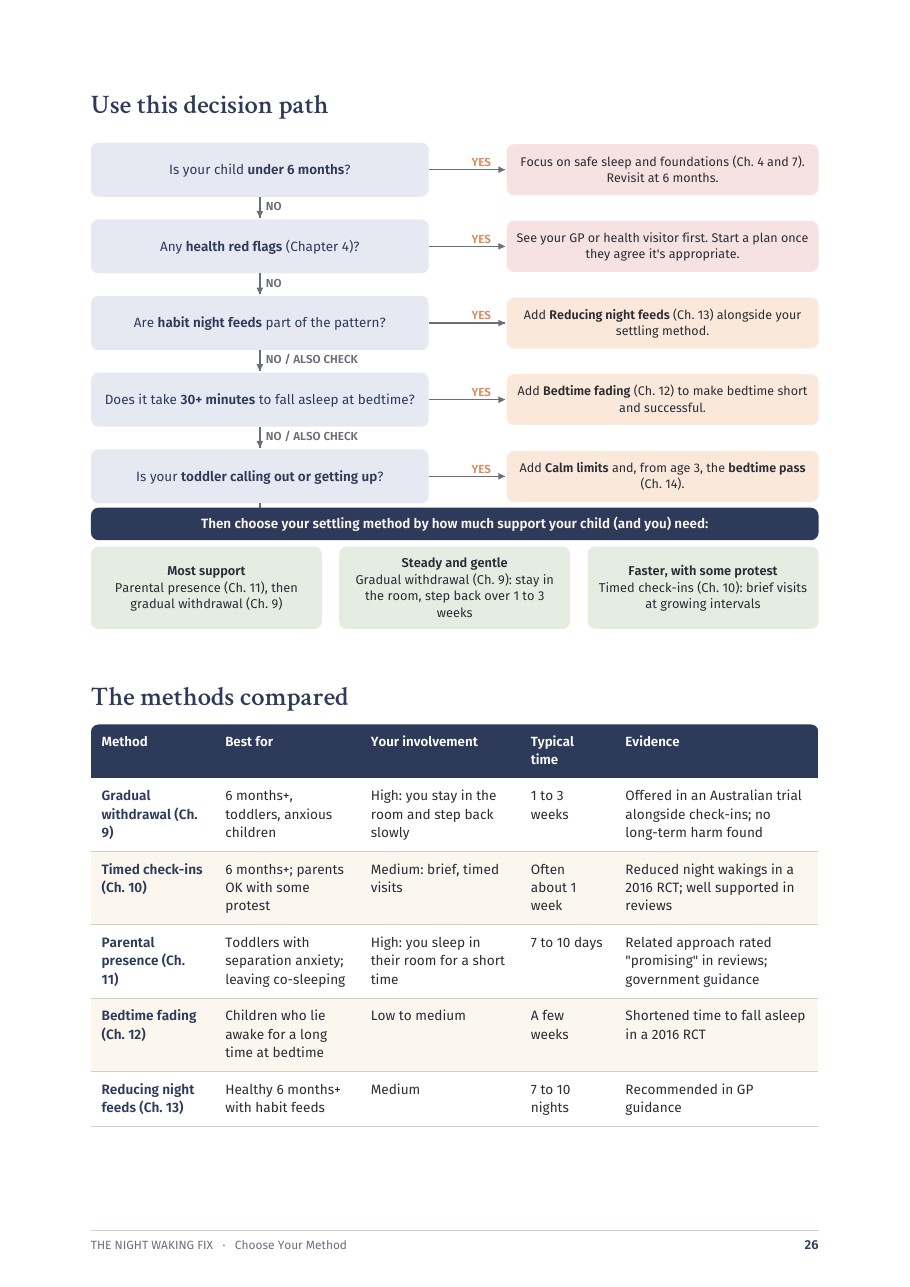
A decision path to choose your method
Match the approach to your child, your values and your situation.
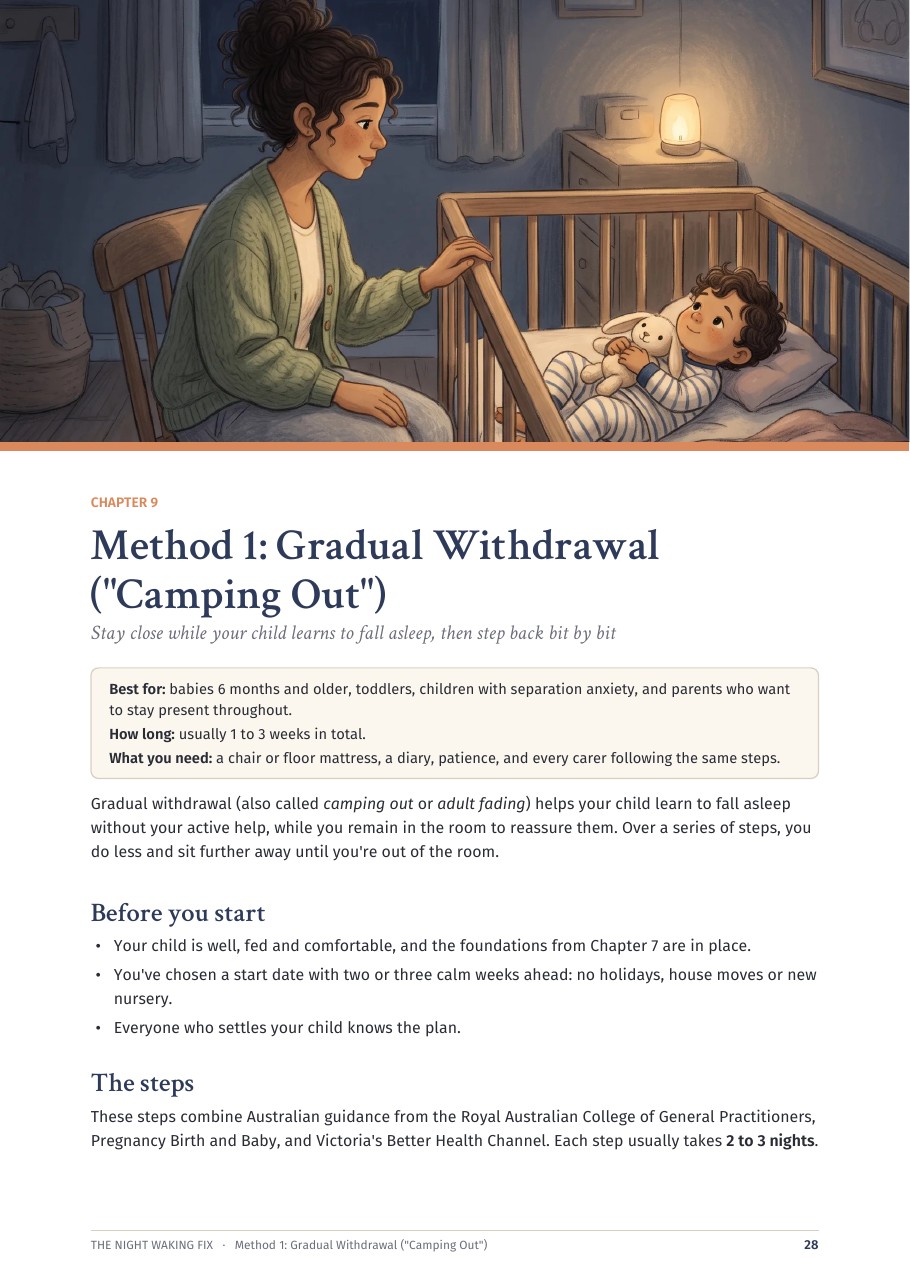
Step-by-step method instructions
Know exactly what to do at bedtime and at every wake-up.
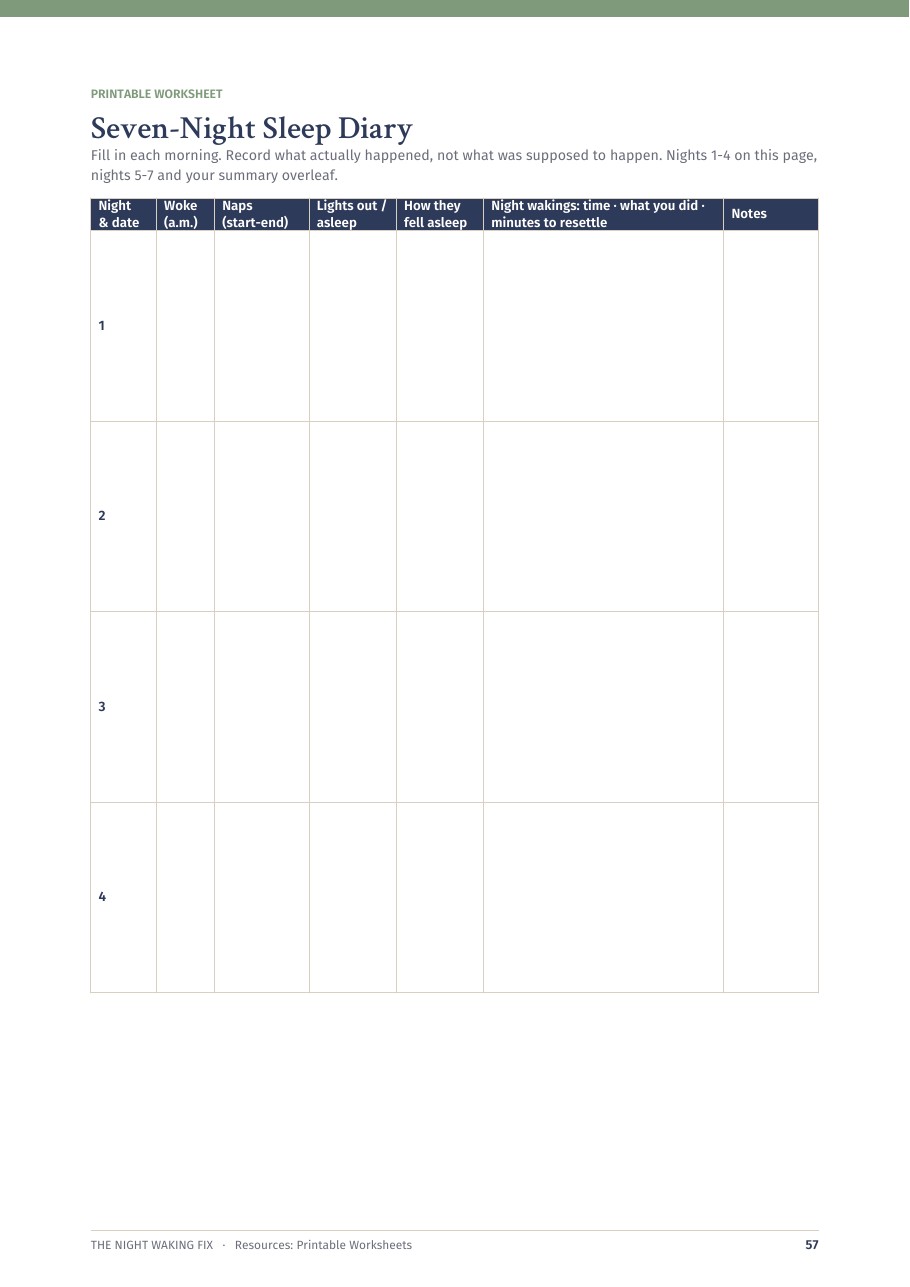
Seven-night sleep diary
Spot the patterns behind the wake-ups before you change anything.
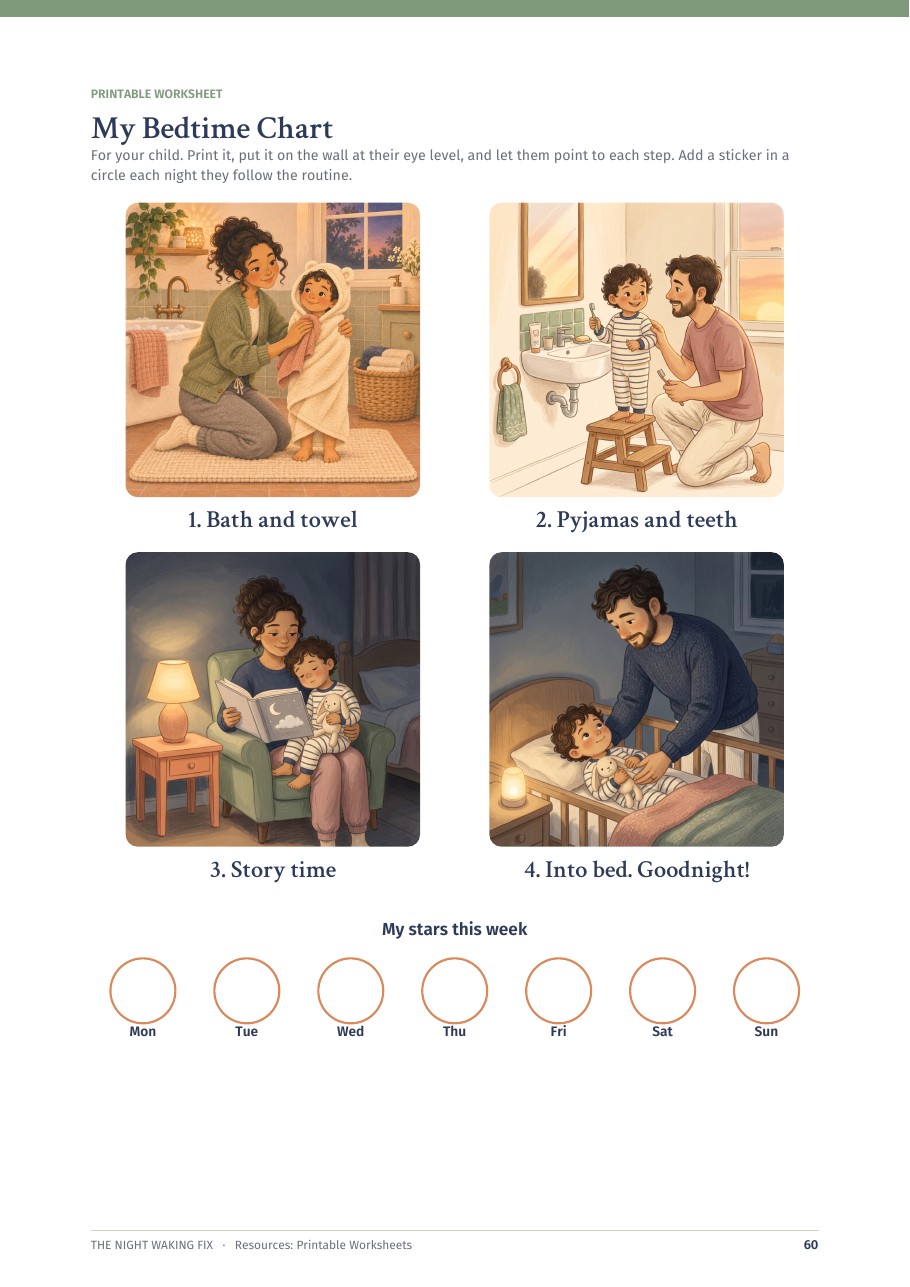
A picture bedtime chart for your child
Four illustrated steps your child can follow and tick off.
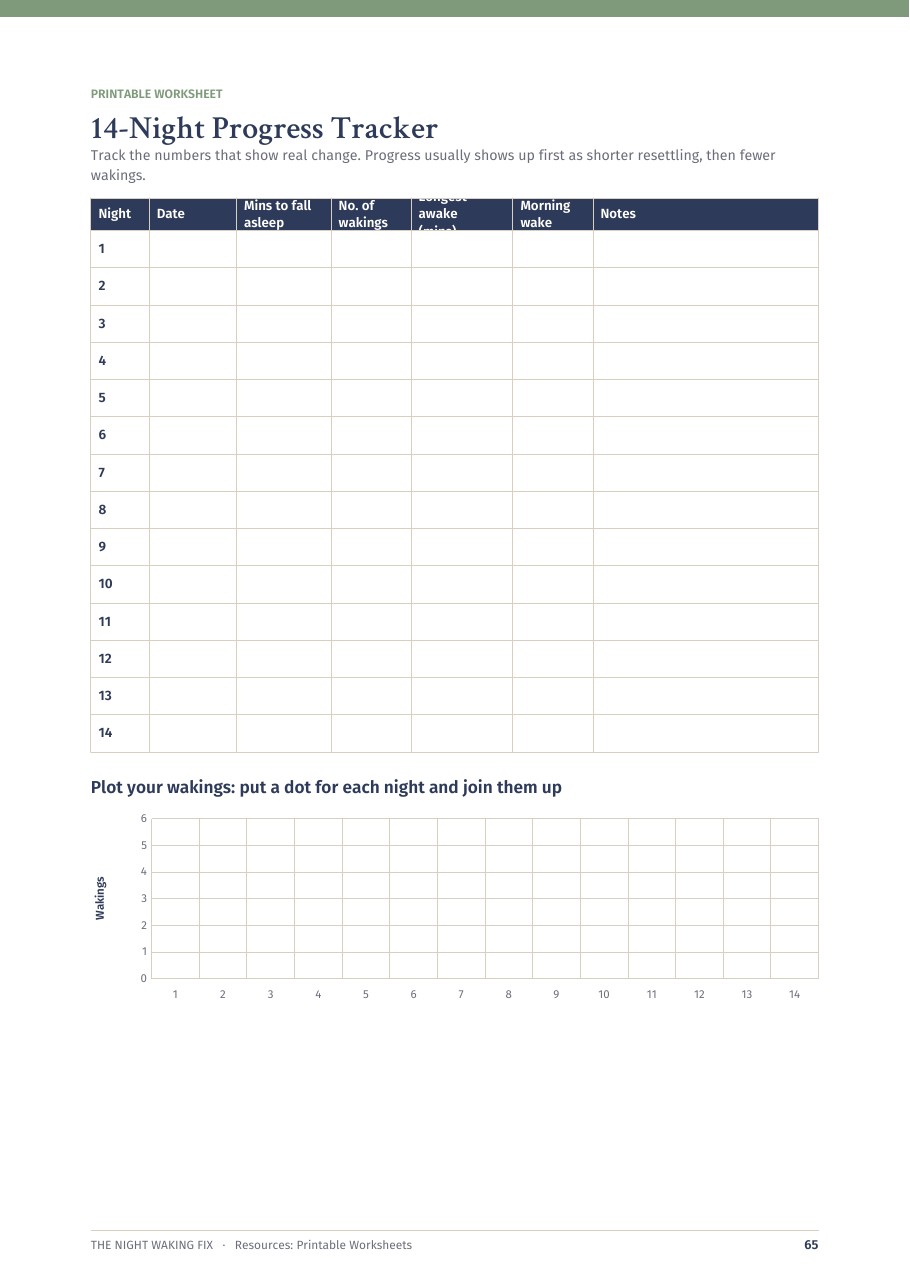
14-night progress tracker
See real progress, even on the nights that feel hard.
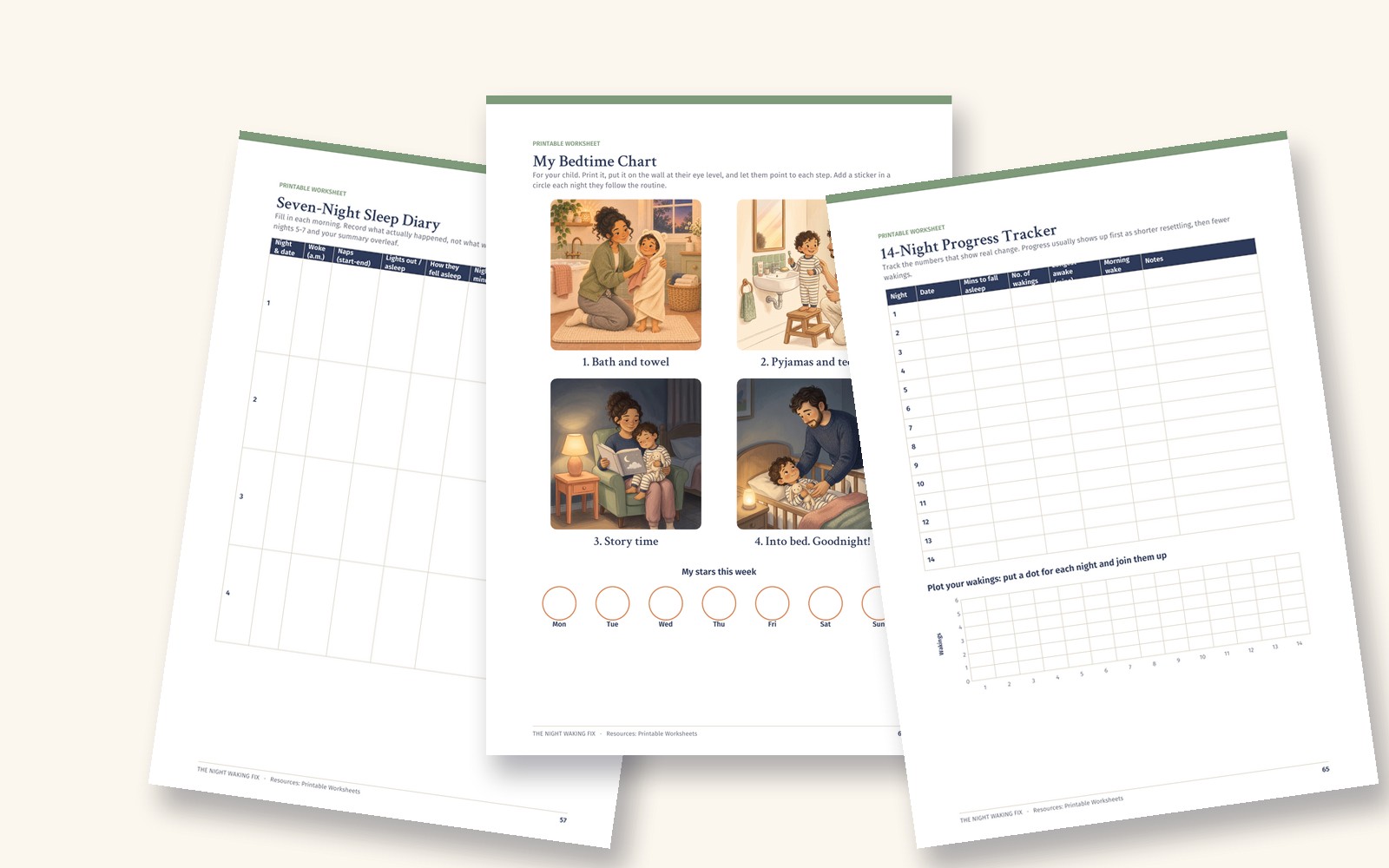
10 worksheets that turn the plan into action
Print them, pop them on a clipboard by the cot, and stop making decisions at 3 a.m.
- Seven-Night Sleep Diary
- Bedtime Routine Builder
- My Bedtime Chart (for your child)
- My Night Plan
- Check-In Card and Withdrawal Planner
- Night-Feed Reduction Planner
- Caregiver Agreement
- 14-Night Progress Tracker
- Weekly Review
- Health Appointment Notes
Choose the approach that fits your family
No single method is forced on you. Each one comes with clear steps, what to expect and how to troubleshoot.
Gradual Withdrawal
“Camping out”: stay close while your child settles, then step back bit by bit.
Timed Check-Ins
Brief, reassuring visits at gradually longer intervals, for families comfortable with some protest.
Parental Presence
For children with strong separation anxiety who panic when you leave.
Bedtime Fading
For children who lie awake for ages at bedtime: temporarily move bedtime, then bring it earlier.
Night-Feed Reduction
A gentle, gradual plan for healthy children whose wake-ups are driven by feeding.
Not sure which is right?
The guide’s decision path helps you choose based on your child, your values and your situation.
Made for tired parents of healthy little ones
This is for you if…
- Your baby is 6 months or older, or you have a toddler or preschooler
- Your child is healthy but wakes several times a night
- You want a clear plan instead of more conflicting advice
- You’d like options, from very gentle to faster
It isn’t the right fit if…
- Your baby is under 6 months (the guide covers safe-sleep basics, but the methods are for older babies)
- Your child is unwell, or you’re worried about breathing, growth or development: please see your doctor first
- You’re looking for a one-night miracle
Research-backed, safety first
Every recommendation is based on published research and official guidance, including the American Academy of Sleep Medicine, the American Academy of Pediatrics, the NHS and Australian GP guidance. All 20 sources are listed and linked in the guide. Before any method, you’ll check safe-sleep basics and the health red flags that mean you should see a doctor first.

Why I created The Night Waking Fix
I’m not a parent myself, but I love digging into the evidence. I kept seeing exhausted families drowning in conflicting advice, with no clear plan.
So I turned trusted research and official guidance into a calm, practical guide you can actually use at 3 a.m., with every source shown and every example clearly labelled.
$18.99 one-time
70-page illustrated guide · 7-night quick start · Night Waking Profile self-assessment · 5 step-by-step settling methods · toddler strategies and troubleshooting · 10 printable worksheets · instant download to read on any device or print
Frequently asked questions
What age is this guide for?
Babies from about 6 months, toddlers and preschoolers. It includes safe-sleep information for younger babies, but the settling methods are for children 6 months and older.
Does it involve leaving my child to cry?
No single method is forced on you. The guide covers five approaches, from very gentle options where you stay in the room to faster ones, and helps you choose the one that suits your family.
How quickly will it work?
Every child is different. Many methods take one to three weeks of consistent use, and the guide explains what to expect and how to troubleshoot.
How do I get the guide?
Right after checkout you’ll get an instant download link for the PDF. Read it on your phone, tablet or computer, and print the worksheets at home.
Is this medical advice?
No. It’s general information for families with healthy children, based on published research and official guidance. If you’re worried about your child’s health, talk to your doctor or health visitor.
Can my partner or carer use it too?
Yes. It includes a Caregiver Agreement worksheet so everyone responds to wake-ups the same way.
Tonight can be the first night of the plan.
Get The Night Waking Fix and start getting your nights back.
This guide provides general information for families with healthy children and is not a substitute for medical advice. Every child is different and results vary.